Finding a crack in your basement wall can be alarming. The good news is that many cracks are normal and cosmetic. The less-good news is that some are early warnings of a problem that gets harder and more expensive to fix the longer it waits. Here's how to tell the difference, and what foundation repair options look like.
Why Minnesota foundations crack
Concrete shrinkage. Concrete shrinks as it cures, and almost every poured foundation develops some small cracks in its first years. These are usually harmless.
Freeze-thaw cycles. Water in the soil freezes and expands, then thaws, over and over through a Minnesota winter and spring.
Frost heave. Freezing soil can push against foundations and slabs.
Hydrostatic pressure. During spring thaw and heavy rain, saturated soil presses hard against basement walls. This is when many leaks and new cracks appear.
Clay soils. Soils that swell when wet and shrink when dry keep walls under changing pressure.
Drainage problems. Short downspouts, clogged gutters, and soil sloping toward the house send water straight to the foundation.
Cracks that are usually not structural
These are typically cosmetic, though worth monitoring and sealing if they leak:
Thin vertical or slightly diagonal cracks in poured concrete walls, often near windows or at corners
Hairline cracks in the basement floor slab
Cracks that haven't changed over several seasons
Even a harmless crack can let in water or soil gases, so sealing leaking cracks is still worthwhile.
Warning signs that need a professional look
Horizontal cracks, especially in concrete block walls. This often means soil pressure is pushing the wall inward.
Stair-step cracks following the mortar joints in a block wall
Bowing, bulging, or leaning walls. Hold a long straight edge or level against the wall to check.
Cracks wider at one end than the other
Cracks that are growing or reopening after repair
Water, damp soil, or white mineral deposits (efflorescence) coming through
Signs upstairs: doors and windows that suddenly stick, new drywall cracks above doorways, or sloping floors
If you see bowing walls, horizontal cracks, or cracks that are clearly moving, have the foundation evaluated promptly. In many cases the right first step is an assessment by a structural engineer, who can specify the repair.
How to monitor a crack
For cracks you're keeping an eye on:
Mark the ends of the crack with a pencil and write the date next to each mark.
Photograph it with a tape measure or ruler held next to it.
Recheck every few months, especially after spring thaw.
If the crack grows past your marks or gets wider, it's moving, and it's time to call someone.
Common repair methods
The right repair depends on what's causing the crack, how the wall is built, and whether it's moving.
Crack injection
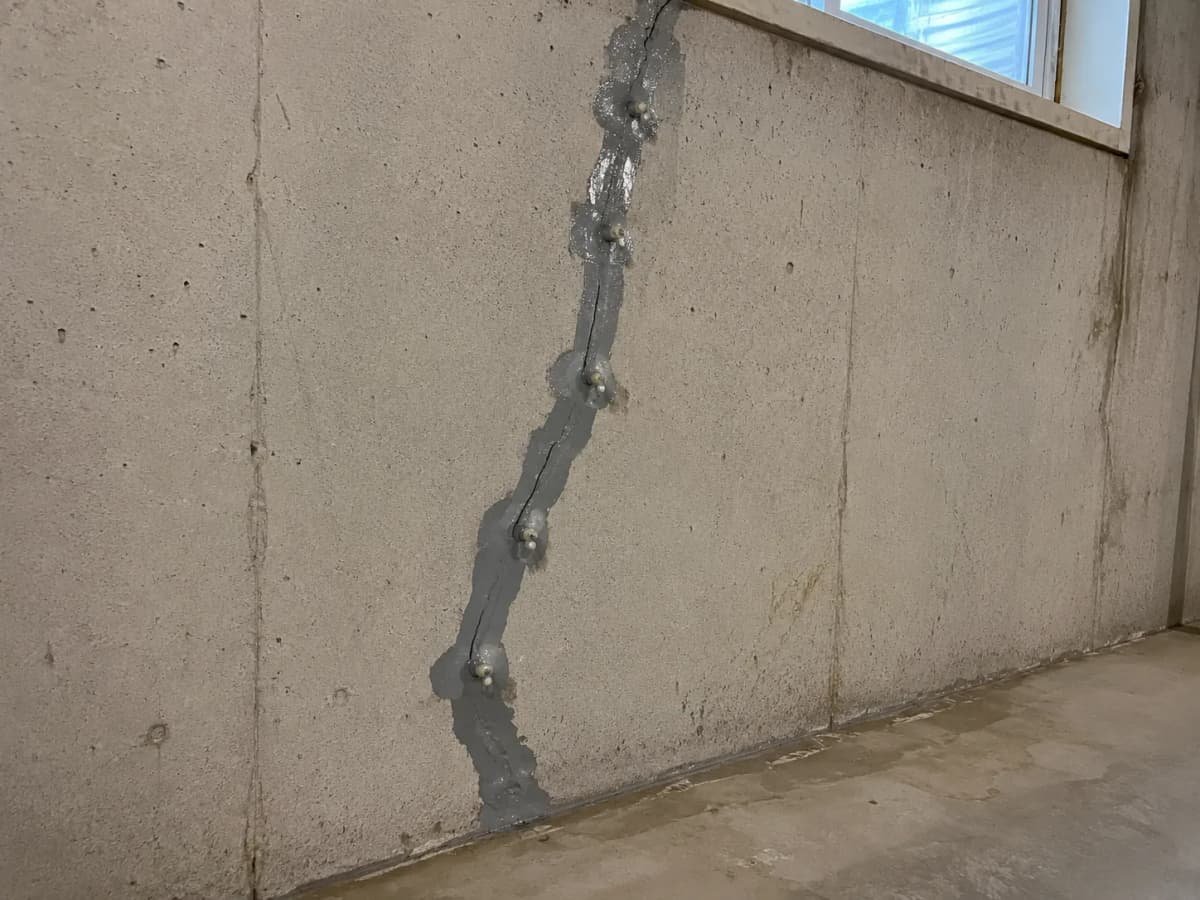
For cracks in poured concrete walls, material is injected into the crack from the inside through small ports.
Polyurethane stays flexible and expands to fill the crack. It's the usual choice for stopping leaks in non-structural cracks.
Epoxy bonds the concrete back together and restores strength. It's used when a crack needs a structural repair.
Wall stabilization
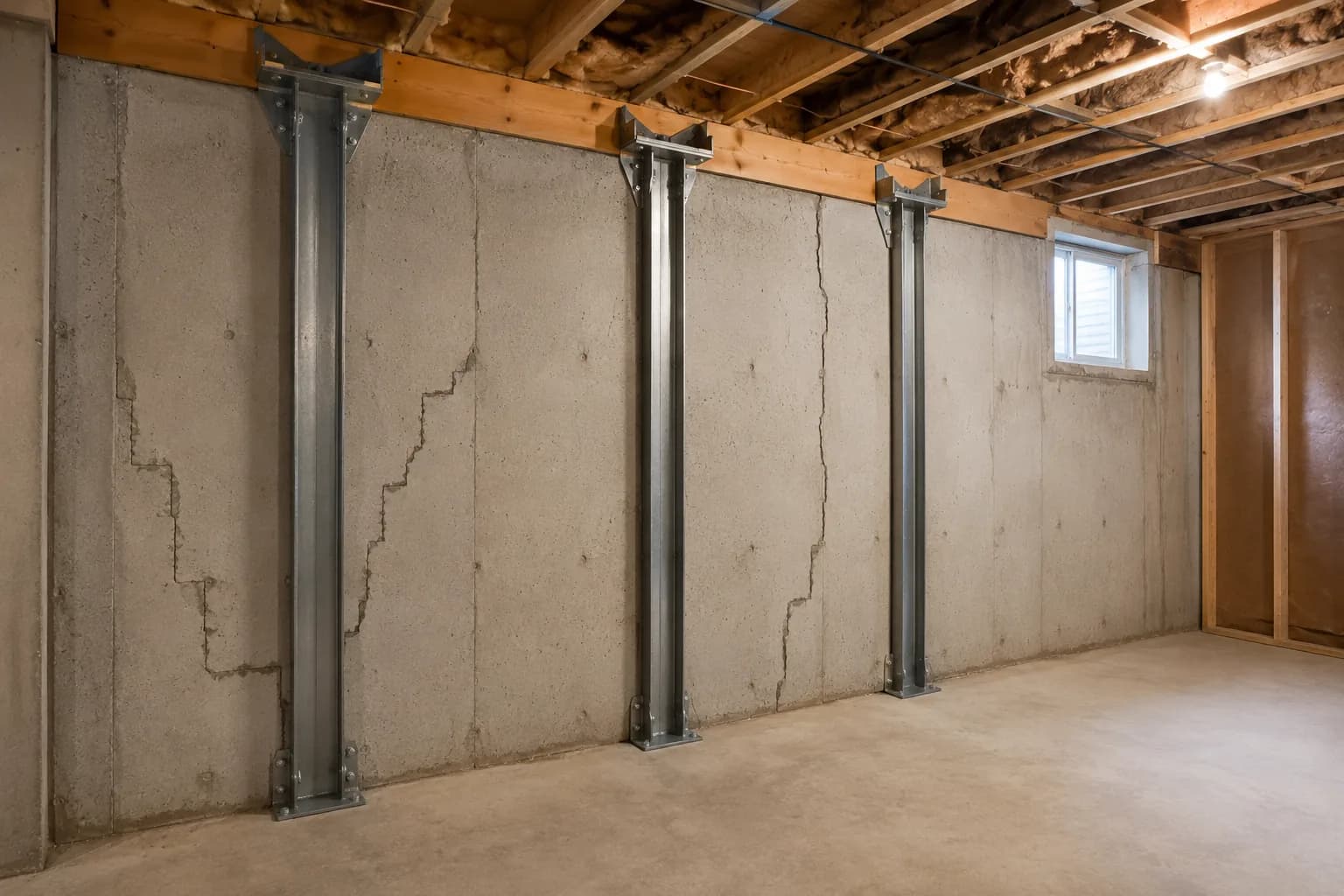
For walls that are bowing or have been pushed inward, reinforcement stops further movement:
Steel beams or braces anchored to the floor and the framing above
Wall anchors that tie the wall to stable soil outside
Carbon fiber straps bonded to the wall, a low-profile option for walls with limited movement
Waterproofing and drainage
When water is the underlying problem, stopping it is part of the fix:
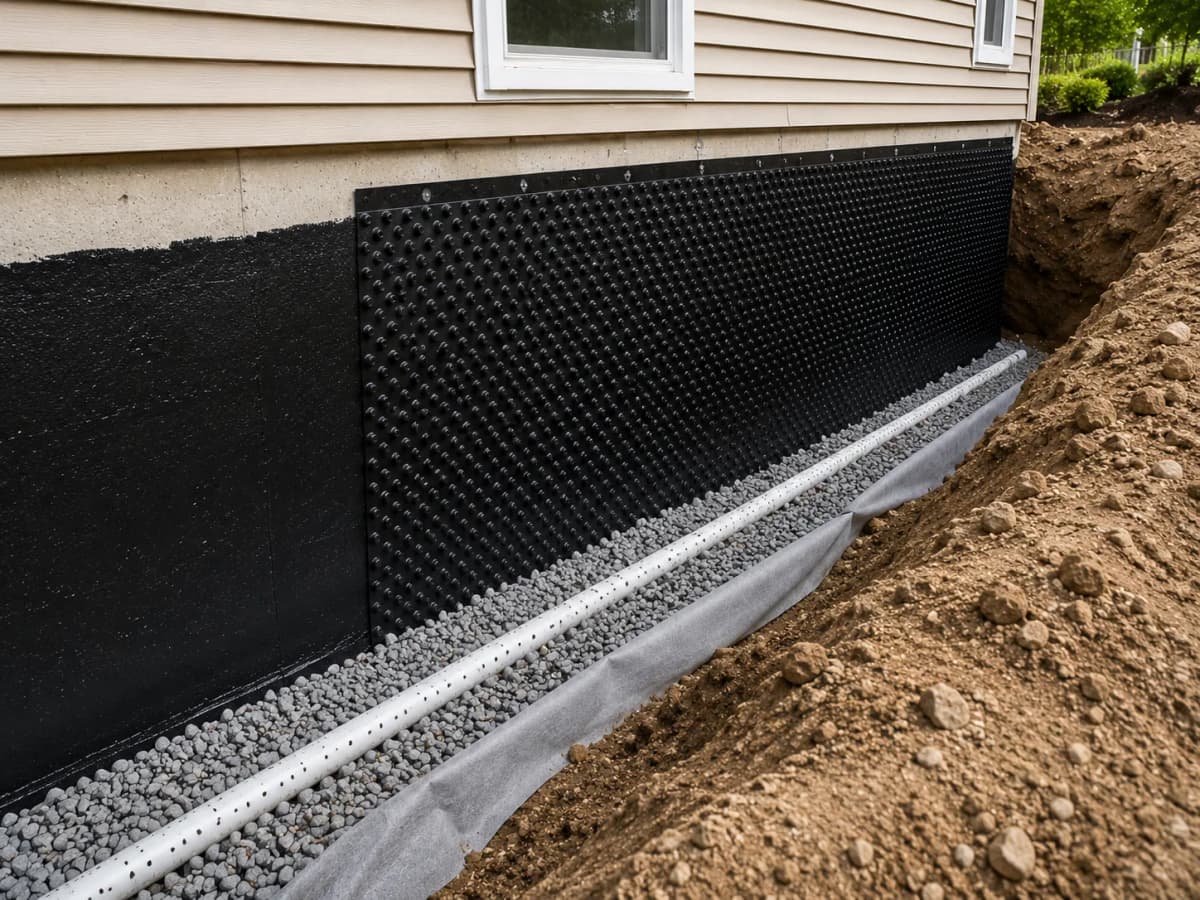
Exterior waterproofing: excavating around the foundation, applying a waterproof membrane or drainage board, and installing drain tile at the footing
Interior drain tile and a sump pump: collecting water along the inside perimeter and pumping it out before it reaches the living space
Start with the easy fixes
Before any major repair, and after one, make sure water is being directed away from the house:
Extend downspouts well away from the foundation
Keep gutters clean and flowing
Re-grade soil so it slopes away from the house
Keep window wells clean and draining
These simple steps prevent a surprising number of foundation problems.
Before you finish your basement
Always deal with cracks and moisture before putting up walls and flooring. Finished walls hide problems until they become big ones. If you're planning a basement bedroom, see our guide to egress windows in Minnesota.
Have a crack you're unsure about?
We can take a look and help you understand what you're seeing and what, if anything, needs to be done. Learn about our foundation repair services, or request a free estimate.